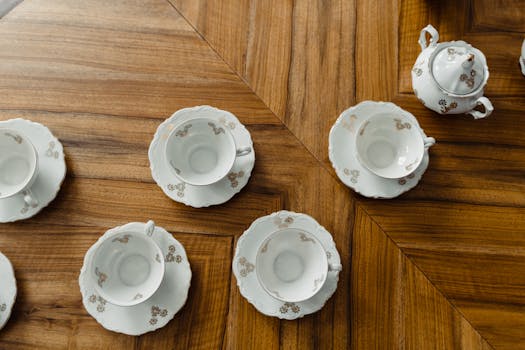
Vintage tea cups are more than delicate vessels for sipping tea—they are tangible artifacts of history, craftsmanship, and cultural exchange. Their evolution from practical drinking wares to cherished collectibles mirrors the transformation of society, industry, and art across centuries. This article traces the fascinating journey of vintage tea cups, from their 18th-century origins to their enduring allure in the 21st century, unveiling the stories, innovations, and personalities that have shaped these elegant treasures.
The Birth of the Tea Cup: 18th Century Origins
The story of the vintage tea cup begins in the early 1700s, a time when tea was still a rare and luxurious commodity in Europe. Tea drinking had been introduced to England in the mid-17th century, but it wasn’t until the 18th century that tea cups—distinct from coffee cups—started to emerge as specialized wares.
Initially, European tea cups closely resembled their Chinese porcelain predecessors. The earliest imported Chinese tea cups, known as "handleless bowls," were small, delicate, and lacked handles entirely. European potteries, eager to cater to the growing tea craze, began producing their own porcelain and earthenware versions. Landmark English potteries like Worcester (founded in 1751) and Wedgwood (established in 1759) soon elevated the tea cup to a symbol of refinement.
By the late 1700s, the addition of handles to tea cups became fashionable, a distinctly European innovation. Handles made the cups easier to use and less likely to burn the fingers, marking a pivotal shift in both function and form. By 1790, tea cups with handles had become standard across England and much of Europe.
Evolution and Innovation: 19th Century Tea Cup Styles
The 19th century witnessed a golden age for tea cups as the Industrial Revolution transformed manufacturing and social customs. Technological advancements like bone china, invented by Josiah Spode in the 1790s, resulted in stronger, whiter, and more translucent wares. Bone china quickly became the preferred material for fine tea cups in England and beyond.
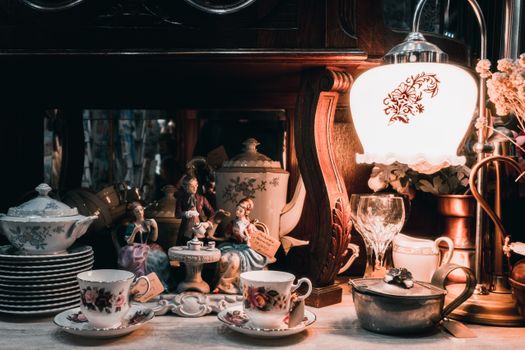
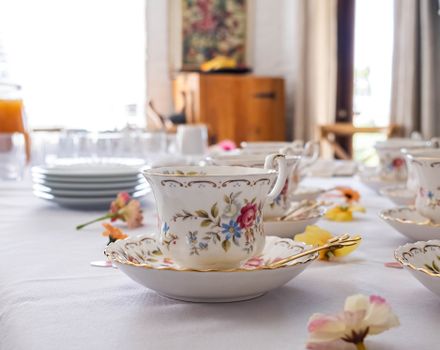
During the Victorian era (1837–1901), tea drinking became a central social ritual, particularly among the middle and upper classes. Afternoon tea, popularized by Anna, Duchess of Bedford in the 1840s, led to an explosion of tea wares, including elaborately decorated cups and saucers. Victorian tea cups featured intricate patterns, gilded rims, and floral motifs, often produced by renowned makers such as Royal Crown Derby, Royal Worcester, and Minton.
By the mid-19th century, transfer printing and hand-painting allowed for mass production and greater artistic variety. Tea cups began to reflect not just social status, but also the artistic tastes of their owners. The rise of Art Nouveau and later Art Deco styles in the late 19th and early 20th centuries brought bold colors, abstract forms, and geometric patterns to tea cup design.
Tea Cups Around the World: Cultural Influences and Design Differences
While England is often credited as the cradle of the vintage tea cup, other cultures have made unique contributions to its evolution. A comparison of tea cup styles from different regions reveals a tapestry of influences:
| Region | Distinctive Features | Famous Makers | Typical Materials |
|---|---|---|---|
| England | Handled cups, saucers, floral patterns, bone china | Royal Albert, Wedgwood, Royal Doulton | Bone china, porcelain |
| China | Handleless bowls, delicate painting, fine porcelain | Jingdezhen kilns | Porcelain |
| France | Rococo and Empire styles, ornate gilding, soft-paste porcelain | Sèvres, Limoges | Soft-paste porcelain |
| Japan | Minimalist design, asymmetry, rustic glazes, often handleless | Imari, Kutani | Porcelain, stoneware |
| Germany | Elaborate baroque motifs, Meissen blue onion pattern | Meissen | Hard-paste porcelain |
For example, French Sèvres tea cups are celebrated for their sensual curves and rich, painterly surfaces, while Japanese Imari cups prioritize simplicity and the beauty of raw glaze. Each regional style reflects local traditions, materials, and aesthetic ideals, making vintage tea cups an international art form.
Famous Makers and Iconic Patterns: 20th Century to Present
As the 20th century dawned, the vintage tea cup continued to evolve in step with changing tastes and technologies. The aftermath of the World Wars saw a democratization of design, with companies like Royal Albert (founded 1904) introducing patterns like "Old Country Roses" in 1962, which has since become the best-selling bone china pattern in the world—over 130 million pieces have been sold globally.
The Art Deco movement (1920s–1930s) brought geometric shapes and bold color contrasts to tea cup design, exemplified by Shelley and Clarice Cliff’s iconic wares. Mid-century modernism (1950s–1960s) introduced minimalist forms and playful motifs, as seen in the works of Alfred Meakin and Susie Cooper.
In the latter half of the century, the decline of formal tea rituals in Western homes led to a drop in everyday tea cup production. However, the nostalgia for vintage style and the growth of collecting culture have kept demand strong. Auction houses like Christie’s have sold rare 18th-century tea cups for over $10,000, while mass-produced vintage patterns from the 1950s and 1960s remain popular on platforms like eBay and Etsy.
Today, contemporary artisans and luxury brands continue to produce tea cups inspired by vintage designs, merging tradition with modern aesthetics. Limited-edition reissues and collaborations with artists ensure that the legacy of vintage tea cups endures.
Materials, Techniques, and Decoration: How Tea Cups are Made
The allure of vintage tea cups lies not only in their design but also in the remarkable materials and skills used in their creation. The three main materials are:
1. Porcelain: Known for its whiteness, translucency, and strength. First made in China, it became the gold standard in Europe after the Meissen factory cracked the formula in 1708. 2. Bone China: Developed in England around 1794 by Josiah Spode, bone china incorporates bone ash, which imparts extra whiteness and durability. It remains the preferred material for luxury tea cups. 3. Earthenware: More affordable and less translucent, earthenware was popular for everyday use, especially in the early 19th century.Decoration techniques have evolved as well. Early cups were hand-painted, often by women and children working in cottage industries. By the 1830s, transfer printing allowed intricate patterns to be mass-produced. Gilding, enameling, and lithography further expanded decorative possibilities.
A remarkable fact: the average bone china tea cup is fired at temperatures up to 1,250°C (2,282°F), which vitrifies the clay and fuses the glaze, ensuring both beauty and durability. The attention to detail in vintage tea cup production often means that even mass-produced items display a high level of artistry.
The Enduring Appeal and Collectibility of Vintage Tea Cups
Why do vintage tea cups continue to captivate collectors and tea lovers today? Part of their appeal lies in their tangible connection to the past. Each cup tells a story—not just of its maker or owner, but of the society that produced it. For example, the introduction of handleless cups in the 18th century speaks to the influence of Chinese tea culture, while the ornate patterns of Victorian cups reflect the era’s love of excess and display.
Collecting vintage tea cups can also be an accessible entry into the world of antiques. While rare 18th-century pieces may fetch thousands, many beautiful early-to-mid 20th-century cups sell for $20–$100 each. According to a 2022 survey by Antiques Trade Gazette, the market for vintage tea wares grew by 18% between 2018 and 2022, fueled by younger collectors and renewed interest in sustainable, heirloom-quality goods.
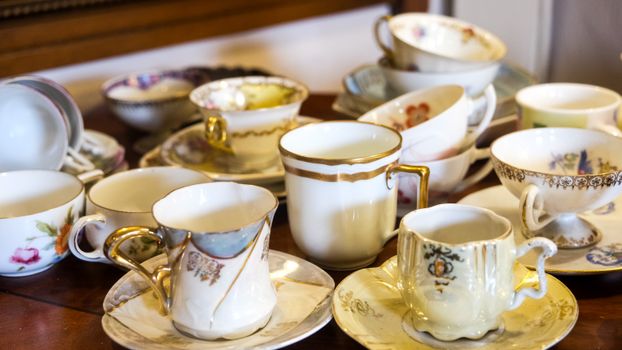
Many collectors focus on particular makers, patterns, or periods, while others seek out unusual shapes, hand-painted details, or cups with historical provenance. Vintage tea cups are often used for special occasions, displayed in cabinets, or repurposed as gifts and home décor. Their enduring popularity is a testament to the blend of artistry, utility, and nostalgia that only a true classic can offer.
Final Reflections: The Lasting Legacy of Vintage Tea Cups
From their humble beginnings as imported Chinese bowls to their status as symbols of taste, artistry, and heritage, vintage tea cups have witnessed—and shaped—centuries of cultural change. Today, they invite us to pause, appreciate beauty, and savor the rituals of the past. Whether displayed in a cabinet, cherished as family heirlooms, or enjoyed with a favorite brew, vintage tea cups continue to connect us to history, craftsmanship, and a sense of shared refinement.