The History and Origin of the Most Famous Vintage Tea Cups: What You Should Know
Tea cups are more than just delicate vessels for sipping your favorite blend; they are artifacts of culture, craftsmanship, and history. Vintage tea cups, in particular, carry centuries of stories within their fragile porcelain walls. From royal courts to bustling Victorian parlors, these exquisite cups have traveled through time and across continents, reflecting the tastes and trends of their eras. Understanding the history and origin of the most famous vintage tea cups is key for collectors, enthusiasts, and anyone who appreciates the art behind every cup of tea.
In this article, we’ll explore how tea cups evolved from humble beginnings into the stunning collectibles we admire today, examine the origins of the most celebrated designs, and reveal the cultural milestones that made certain tea cups household names. Whether you’re seeking to deepen your appreciation or add another gem to your collection, this journey through history will give you new insight into the world of vintage tea cups.
The Early Days: From China to Europe
The story of tea cups begins in ancient China, where tea drinking dates back to the Shang dynasty (16th–11th century BCE). However, the earliest tea cups looked very different from what we know today. Chinese tea bowls, made from porcelain as early as the Tang dynasty (618–907 CE), had no handles and were small enough to be cradled in the palm of the hand. Porcelain, prized for its durability and translucent beauty, became synonymous with Chinese craftsmanship.
The global popularity of tea—and tea cups—began in earnest in the 17th century, as European traders introduced Chinese tea and porcelain to the West. Europe’s fascination with Chinese ceramics led to a booming trade. By the mid-1700s, the East India Company was importing over one million pieces of Chinese porcelain to England annually. European aristocrats and royalty collected “china” tea wares as status symbols, setting the stage for the tea culture that would sweep the continent.
As demand grew, European potters sought to replicate the delicate Chinese porcelain. It wasn’t until 1708 that Johann Friedrich Böttger, working in Meissen, Germany, successfully produced hard-paste porcelain on European soil. This breakthrough marked the beginning of a new era in tea cup history, as local manufacturers began crafting their own unique designs.
The Evolution of Tea Cup Design: Handles, Shapes, and Styles
The basic design of the tea cup underwent significant changes as it traveled from East to West. Chinese tea bowls had no handles, but as the custom of drinking tea spread across Europe, modifications were made to suit Western tastes and habits.
By the early 18th century, European makers like Meissen and Sèvres started adding handles to tea cups, making them easier to hold and reducing the risk of burned fingers from hot tea. Handles also became opportunities for artistic embellishment, with ornate shapes and gilded accents becoming popular among the elite.
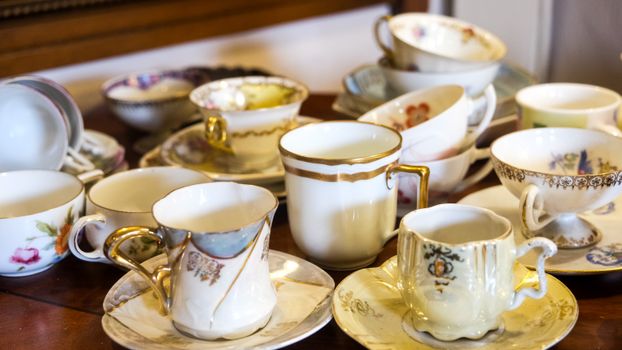
The shape of tea cups continued to evolve, with notable variations including the wide, shallow cups of the Georgian era and the deeper, narrower styles of the Victorian period. By the late 19th and early 20th centuries, tea cups often featured fluted edges, floral patterns, and gold trims, reflecting the decorative tastes of the time.
Here’s a comparison of common vintage tea cup styles and their characteristics:
| Era/Origin | Material | Handle | Main Features | Famous Makers |
|---|---|---|---|---|
| Chinese (Tang–Qing Dynasties) | Porcelain | No handle | Small, bowl-shaped, often blue and white | Jingdezhen |
| Meissen (18th Century Germany) | Hard-paste porcelain | Curved handle | Hand-painted motifs, European scenes | Meissen |
| Georgian England (1714–1830) | Bone china, porcelain | Loop handle | Wide and shallow, delicate floral designs | Wedgwood, Worcester |
| Victorian England (1837–1901) | Bone china | Ornate handle | Deep bowl, gold trim, elaborate patterns | Royal Albert, Shelley |
| Art Deco (1920s–1930s) | Bone china, porcelain | Angular, stylized | Geometric designs, bold colors | Shelley, Aynsley |
Famous Makers and Their Signature Tea Cups
Certain names have become synonymous with vintage tea cups, thanks to their innovative designs, exquisite craftsmanship, and historical significance. Let’s take a closer look at some of the most influential makers:
1. Meissen (Germany): Founded in 1710, Meissen was the first European porcelain manufacturer. Their tea cups, often hand-painted with intricate scenes and floral motifs, are highly collectible. The crossed swords mark, introduced in 1720, is one of the oldest trademarks in the world. 2. Wedgwood (England): Established in 1759 by Josiah Wedgwood, this company revolutionized ceramics with its fine bone china and neoclassical designs. Wedgwood’s “Jasperware” and “Queen’s Ware” tea cups were favored by British royalty and aristocrats. 3. Royal Worcester (England): Known for its fine, translucent porcelain and hand-painted decoration, Royal Worcester has been producing tea cups since 1751. Their “Evesham Gold” range, launched in 1961, remains a favorite among collectors. 4. Royal Albert (England): Founded in 1896, Royal Albert is best known for its romantic floral patterns and delicate gold trims. The “Old Country Roses” design, launched in 1962, is the best-selling bone china pattern in history, with over 150 million pieces sold worldwide. 5. Limoges (France): The Limoges region has produced some of the world’s finest porcelain since the 18th century. Limoges tea cups are celebrated for their luminous white body and hand-painted artistry, often signed by the artist.Cultural Significance: Tea Cups in Society and Ritual
Vintage tea cups are not just beautiful objects; they have played an important role in social rituals and cultural traditions. In England, the ritual of “afternoon tea,” popularized by Anna, the 7th Duchess of Bedford, in the early 19th century, placed the tea cup at the center of polite society. This daily gathering became a symbol of elegance and hospitality, with fine tea cups and matching saucers as essential accessories.
In Japan, the tea ceremony (chanoyu) remains a deeply spiritual practice, with each tea bowl or cup chosen for its aesthetic qualities and seasonal appropriateness. Although Japanese tea cups (yunomi and chawan) differ from Western styles, their role in ritual and artistry mirrors the importance of vintage tea cups in the West.
The Victorian era saw the rise of “tea parties” as a way for women to socialize and display their finest tea wares. By the 20th century, collectible tea cups became treasured family heirlooms, passed down through generations and marking significant life events such as weddings and anniversaries.
Iconic Patterns and Motifs: From Florals to Royal Commissions
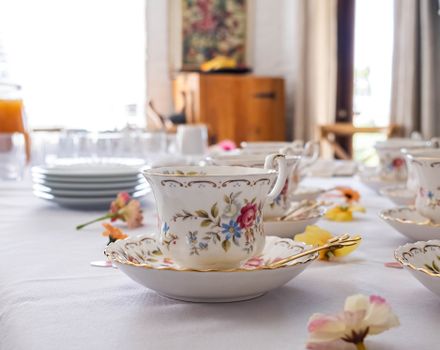
The decoration on vintage tea cups often tells a story of its own, reflecting the artistic trends and societal values of its time. Floral motifs have always been popular, symbolizing beauty and the natural world. For example, Royal Albert’s “Old Country Roses” features clusters of red, pink, and yellow roses, capturing the essence of an English garden.
During the Art Deco period, bold geometric designs and vivid colors became fashionable, as seen in Shelley’s angular tea cup shapes and Aynsley’s striking patterns. Other iconic motifs include blue and white chinoiserie, inspired by Chinese porcelain, and pastoral scenes that evoke a sense of nostalgia.
Royal commissions also played a significant role in the evolution of tea cup design. Queen Victoria’s love of tea and her patronage of British potteries led to the creation of exclusive patterns and commemorative cups. For instance, the 1937 coronation of King George VI saw a surge in the production of souvenir tea cups, many of which are now prized collectibles.
How Vintage Tea Cups Became Collectibles
The transformation of tea cups from everyday objects to sought-after collectibles is a story shaped by changing tastes and the rise of collecting as a hobby. The mid-20th century saw a revival of interest in Victoriana, with collectors scouring antique shops and flea markets for fine bone china and rare patterns.
By the 1980s and 1990s, prices for vintage tea cups soared, with limited edition pieces and those in pristine condition commanding hundreds or even thousands of dollars. For example, a rare 18th-century Meissen tea cup can fetch between $2,000 and $10,000 at auction, while a first edition Royal Albert “Old Country Roses” cup might sell for $300–$500.
Today, demand for vintage tea cups remains strong, driven by nostalgia, the popularity of tea culture, and the enduring appeal of timeless design. Online marketplaces, antique fairs, and specialized dealers offer a wide selection for collectors of all levels, from beginners to seasoned connoisseurs.
Final Reflections: The Lasting Legacy of Vintage Tea Cups
The history and origin of the most famous vintage tea cups reveal more than just trends in ceramics—they offer a window into the cultural, artistic, and social history of the past three centuries. Each cup, whether crafted in a royal porcelain factory or a small artisan workshop, tells a unique story of craftsmanship, innovation, and tradition.
As we continue to cherish and collect these beautiful objects, we not only preserve a piece of history but also celebrate the timeless rituals and connections that tea cups have fostered across generations and continents. Whether you are a collector, a casual enthusiast, or simply enjoy the occasional cup of tea, vintage tea cups invite you to savor both the art of tea drinking and the rich heritage behind every sip.